What are the doctrines of grace, and why do they matter for understanding salvation? Unlocking Grace explores these biblical teachings and shows how sovereignty, election, justification, the cross, and the believer’s security reveal salvation
as a work of God’s grace from beginning to end.
Roger Smalling

© 2001 Deo Volente Publishing, New Mexico. Revised March, 2019.
Revised 2026. All rights reserved by Roger Smalling
All verses are quotes from the English Standard Version unless otherwise indicated.
Preface
What are the doctrines of grace?
Have you ever wondered why God did not define “grace” right at the beginning of the Bible? Since we are saved by grace, it would seem efficient to define it right away. He could have inspired a prophet to write a dictionary definition starting with something like, “Grace is defined as…etc.” This would be to the point, just as we moderns like it.
That is not what we find, is it?
Instead, we encounter a series of stories about imperfect people whom God favored for little apparent reason. This helps moderately, but it still remains ambiguous.
Next, we encounter a series of negations. Grace is not the product of merits. Grace is not deserved. Grace is divine and not human, and so forth. We find our definition search improving, but nailing it down seems like grabbing smoke.
Then we notice how Bible writers connect grace with certain teachings they claim are important. These doctrines quickly begin to unlock the definition, and our understanding improves.
When we encounter the cross, though, all the previous material takes on substance. The fog lifts, and the reason for the delay becomes evident.
God could have given us a short definition, but it would be pitifully shallow. The longer route turns out to be deeper and infinitely more satisfying. A brief definition would save us time, but time seems a low-priority item with him. Other matters, such as a job done thoroughly, appear more important to the Father, especially when it has to do with blessing his people.
Grace itself would never short-change us with paltry definitions. So God goes about defining grace in the only way that could do it justice. Grace is altogether too glorious to do it any other way. Why? Grace reflects an essential element of God’s character. Each member of the Trinity contributes in his own awesome style. Looking at it like that, it seems amazing the Lord managed to define it at all, since grace is involved with defining himself.
Yet once we grasp it, we say, Oh! How remarkably simple! Then we do a double-take and say, But how incredibly profound! Children can understand this gospel while theologians drown in its depths.
After all, that’s typical of God’s style, isn’t it? Did we expect anything else?
So the study of grace turns out to be an involved journey, with unexpected twists. The trip is long but not boring and truly exhilarating. One of these twists is that while we are defining grace, we find ourselves defined more clearly…like it or not. There is plenty of glorious scenery on the way, though, and different people delight in contemplating various views of the route.
Some revel in the authority of a sovereign will. Others savor the security of an eternal covenant. Still others are enthralled at the power of the cross. Personally, the part of the trip I enjoy the most is that it lasts forever.
Enjoy the journey.
Introduction
The Protestant Reformation caused a rediscovery of the Bible, and with it, the revolutionary doctrines it contains. Several of these doctrines conflicted with the teachings of the time because each affirmed that salvation is by grace alone, with no contribution by man. Consequently, these doctrines are known today among Christians as the doctrines of grace.
The controversy continues. These biblical teachings are so destructive to man’s pride that human emotion rebels against them. Sinful human nature imagines itself to be captain of its fate, fully able to contribute to its own salvation.
Roger Smalling did this study of the doctrines of grace originally in Spanish. For easier memorization, these key biblical doctrines were in the form of an acronym. That is, each letter of the words, SI, JESUS (Yes, Jesus) represents one of the doctrines of grace. For the purposes of this English version, the author has chosen to maintain this form to preserve the acronym and simplify the study of these truths.
The Acronym
Sovereignty of God
S The word “sovereign” means to control everything. This doctrine teaches that God controls everything that happens, and that all reality is a consequence of divine decrees established from eternity, before the creation of the world.
Inability of man
I When Adam fell, mankind lost all ability to contribute to salvation. Sin infects every aspect of the individual and enslaves him. This doctrine also deals with the question of free will, showing that a sinner is incapable of choosing Christ, or producing saving faith, apart from a miracle of grace. “Total Inability” or “Total Depravity” are other terms frequently used to describe this teaching.
Justification by faith alone
J God requires nothing less than absolute righteousness, as described in his moral law. How then is it possible to be righteous before God, knowing that we cannot keep the law perfectly? Christ fulfilled the law’s demands as our substitute, both in his life and in his death. When we accept Christ, God not only forgives our sins, but also attributes to us the perfect righteousness of Christ. Thus, we have an imputed perfection relative to God’s holy demands, and this forms the basis of our permanent acceptance before God.
Election by grace
E Before the foundation of the world, God chose certain individuals as recipients of his marvelous grace. He did this apart from any foreseen conditions in us. God’s choice was not because he saw ahead of time that the person would choose Christ. No one could do that anyway since all were dead in sin. Though election has no basis in human merits, it is not arbitrary. This doctrine presents grace as a product of God’s sovereign decree in eternity, and not as a response to something man thinks or does.
Sacrifice of Christ
S The sacrifice of Jesus is the only cause of the salvation of the elect. The crucifixion made salvation much more than a mere possibility. It accomplished salvation for all the elect. Although Christ’s sacrifice is sufficient to save everyone, God the Father designed it for his elect only. The cross is the power-source that guarantees that God’s chosen ones will believe and be obedient. This doctrine is also called limited atonement, and sometimes particular redemption.
Unity and universality of the church
U The Church of Christ is essentially an invisible organism, rather than a visible organization. It is composed of all the elect of God throughout the ages. Christians have a spiritual unity among themselves, whether or not they are unified organizationally. This unity is therefore spiritual and invisible, not terrestrial and visible. It is universal in the sense that the spirituality of the body of Christ and the communion the elect have with one another transcend all limits of culture and time.
Security of the believer
S The same grace that saved us preserves us to the end. Through exhortations, warnings, and fatherly rebukes, God preserves his elect so that none will be lost.
Questions for Review
- The doctrines of grace lead us to the conclusion that salvation is solely by _______________, without any human contribution.
- The Reformation doctrines are known today as ____________.
- True _____ or False _____: The doctrines of grace are no longer controversial today.
- Sinful human nature wants to be _______ of its own ________.
- True _____ or False _____: Man is capable of contributing to his own salvation.
Sovereignty of God
- What does “sovereign” mean? ______________
- True _____ or false _____: Reality is a consequence of the divine decrees.
- When did God decide all things? _______________
Inability of man / Total depravity
- Which parts of the human individual were affected by sin? ________
- This doctrine teaches that a sinner’s will is incapable of coming to Christ for ________________.
- True _____ or False _____: Saving faith comes from our own free will.
- Where does saving faith come from? ________________
- Our inability to contribute to our salvation came about through the fall of __________.
Justification by faith alone
- True _____ or False _____: The righteousness of the law has nothing to do with the Christian.
- God only accepts the _____________ of Christ.
- Can we fulfill the law for ourselves? ___________
- Who fulfilled the law for us? _________________
- When we accept Christ, God grants to us the perfect _____________ of Christ.
Election by grace
- Justification means ____________.
- True _____ or False _____ God chose everyone to be a recipient of his grace.
- True _____ or False _____ No one can choose Christ under his own power.
- Before we knew Christ, we were _______________ in sin.
Sacrifice of Christ (Limited Atonement)
- What makes salvation effective for the elect? __________________.
- The death of Christ not only made salvation a _______, it ___________ it.
- True _____ or False _____ The cross was insufficient to save everyone.
Answers: 1. Grace 2. The doctrines of grace 3. F 4. Master, fate 5. F 6. Controlling everything 7. T 8. Before the creation of the world 9. All of them 10. Salvation 11. F 12. God 13. Adam 14. F 15. Righteousness of Christ 16. no 17. Christ 18. Attributed, righteousness 19. Declared just 20. F 21. T 22. Dead 23. The cross 24. Possibility, accomplished 25. F
Chapter One: Sovereignty of God
 The sovereignty of God is the only legitimate basis for a solid faith. Although someone might claim to have faith without believing in God’s sovereignty, a close examination exposes a trust based on human ability. Divine sovereignty is so crucial to biblical Christianity that without it, our faith is scarcely worthy of the name Christian. But the pervasive influence of humanism in modern society has deeply affected every domain of thinking, from the political to the religious. Even among conservative Christians, the sovereignty of God is frequently neglected in the pulpit. This is unfortunate, because it is the only possible foundation for a stable Christian walk. Everything else crumbles under the pressures of life.
This doctrine contends that all reality is a product of divine decrees established before the creation of the world. It claims that God is in control of everything that happens, good or bad. This does not mean, however, that God causes evil or is the author of sin. Nor does he rejoice in the sufferings of his creation. It indicates that everything forms part of a great plan that will inevitably result in his glory.
Why do we say it is the only valid foundation for the believer’s faith?
First, only a sovereign God can guarantee his promises. Only if he controls everything can we trust him for salvation. Otherwise, something he does not govern might prevent him from saving us. Is it logical to trust in a God who does not control everything?
Second, if God were not sovereign, it would be impossible to derive spiritual lessons from the events of our lives. We could never know if God is teaching us something or if the episodes of life are mere happenstance. Trusting God would be little better than trusting to luck.
Third, the sovereignty of God is the only basis on which to give him glory. Unless he is responsible for the entire work of salvation in our lives, why give him all the glory?
Fourth, this is the only basis for prayer. Why pray to a God who is not sovereign? Unless he controls everything, then perhaps he cannot answer us, either.
The very idea of sovereignty implies unlimited control and authority. It is impossible for God to be a little bit sovereign or even mostly sovereign. Thus, it is illogical to contend, God is sovereign, but … If we add the word “but,” we confess we do not really believe God to be sovereign. Such affirmations are like proposing that God is somewhat infinite or almost all-powerful. Any effort to qualify God’s sovereignty is a tacit denial of it.
How we know God is sovereign
Four foundational biblical ideas establish the sovereignty of God. These follow in logical order:
- The divine attributes of omniscience and omnipotence.
- The immutable will of God. (This means unchangeable.)
- Reality as a product of God’s will.
- God owns everything.
First Foundation: His attributes
The Bible teaches God’s omniscience, meaning that he knows everything. Known to God from eternity are all his works. Acts 15:18
“Omnipotent” means that God is almighty. For the Lord our God, the Almighty, reigns. Revelation 19:6
Denial of the sovereignty of God implies a denial of one or both attributes. Example: Suppose something happens that God did not ordain. It could only be for one of two reasons: either he did not know it was going to happen, or he lacked the power to prevent it.
In the first case, he would not be all-knowing. In the second, he would not be all-powerful. The existence of these two attributes makes it impossible for anything to happen without divine permission.
Second Foundation: Immutability
The word “immutable” means never changing. It also carries the idea of irresistible. This term is found in Hebrews 6:17-19. To better understand it, it helps to distinguish between two aspects of the divine will. These are his will of command versus his will of purpose.
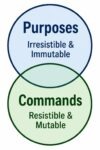 God expressed his will of commands as moral edicts, such as the Ten Commandments. God allows people to transgress these laws, and man sins in doing so. But when God decrees that he will fulfill a certain purpose, he allows no one to invalidate or hinder it.
Example: Suppose God said, “Do you see that tree? I command that no one should cut it down.” This would be a divine injunction, the expression of his will of commands. Would God permit someone to cut the tree down? Yes, because God allows his commands to be broken.
Suppose, though, God said, “My sovereign purpose is that this tree never be cut down.” Would God allow someone to cut it down? No power on earth, human or demonic, could cut down that tree. God would prevent it.
Were it not for his will of commands, man would not be allowed to sin. And without his will of purpose, we would lack the confidence that God could fulfill his promises.
Theological disaster results from ignoring the difference between these two aspects of God’s will.
So, his will of command can be resisted. God himself may choose to change his commands. Not only does he allow his commands to be broken, but he may even annul them. The Old Testament ceremonial laws, for example, are no longer binding.
Not so with immutable decrees. These never change, and no one stops him from accomplishing them. This idea is sometimes expressed in Scripture as his counsels.
My counsel shall stand, and I will accomplish all my purpose. Isaiah 46:10
Other times, the word “purpose” expresses the same thought.
So when God desired to show more convincingly to the heirs of the promise the unchangeable character of his purpose, he guaranteed it with an oath.
Hebrews 6:17
… according to the purpose of him who works all things according to the counsel of his will. Ephesians 1:11
For the Lord of Hosts has purposed, and who will annul it? His hand is stretched out, and who will turn it back? Isaiah 14:27
Some texts may not use these terms, but the idea comes across unmistakably.
…and he does according to his will among the host of heaven and among the inhabitants of the earth; and none can stay his hand or say to him, “What have you done?” Daniel 4:35
Through the concept of immutability, we see more clearly what is meant by the phrase sovereignty of God. We have more than solid grounds for trusting him.
Third Foundation: Reality is a product of God’s will
For he spoke, and it came to be; he commanded, and it stood firm. Psalm 33:9
This answers the question, “Where does reality come from?”
According to the Bible, all reality is a product of the divine decrees, established before the foundation of the world.
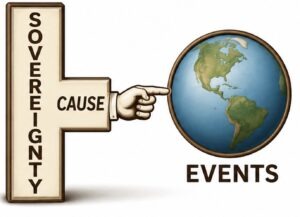
By faith we understand that the universe was created by the word of God, so that what is seen was not made out of things that are visible. Hebrews 11:3
This verse can be translated as, By faith we understand that the epochs of time were established.
The events of history, good or bad, have taken place by the will of God. This includes the most important as well as the most insignificant events.
Worthy are you, our Lord and God, to receive glory and honor and power, for you created all things, and by your will they existed and were created. Revelation 4:11
This affirmation is clear. All things owe their existence to God.
Occasionally we read in the Gospels, …this happened that the word might be fulfilled… This phrase says more than that the prophet simply predicted the event. It says that the event took place to fulfill the decrees of Scripture. Normally, people involved in fulfilling these prophecies were unaware they were fulfilling anything.
In this we see the bottom-line principle behind the sovereignty of God: Reality is a product of the will of God.
A prophecy is simply a declaration of that will. Reality obeys what God has commanded.
Prophecy, therefore, is more than divine foresight. It is a declaration of infallible divine intent. Here are several examples:
In Matthew 21:1-4, Jesus told his disciples to look for a certain donkey in a village. Surely the owner was unaware of Zechariah’s prophecy concerning Christ’s triumphal entry into Jerusalem. The entire incident illustrates the sovereignty of God in the sense that the prophecy was more than divine foresight. It was a divine arrangement.
When the crowd came to capture Jesus in Gethsemane, he said this occurred to fulfill the Scriptures.[i] In the texts that describe the arrest and crucifixion, it’s obvious that everything takes place according to a divine plan.
The Roman soldiers divided Christ’s garments to fulfill what was written by the prophet. These pagans were unaware they were fulfilling Scripture.
How does God know the future with certainty? Some suppose that God has a mental capacity, like a supreme fortune-teller, allowing him to peer into the future, as though he had a telescope through which to look down the corridor of time and examine coming events. Some teachers even assert that God forms his plans based on this discernment. This idea is called the concept of foreknowledge.
Many Christians believe this idea today. Yes, the word “foreknowledge” appears in Scripture. However, to interpret it strictly in terms of a passive divine observation is a defective approach. After all, who created time? Did God create it? Or is time something God discovered by chance in the course of eternity?
If God created everything, then he also created time. And if he created time, he also ordained the events that occur in it. If we deny this, we are affirming that God created the universe without purpose or without full comprehension of what he was creating.
The only sensible option left is the scriptural teaching about sovereign decrees. The foreknowledge of God is simply his own understanding of his purposes, which no power in the universe can change.
Fourth foundation: God owns everything
During a Bible study, a woman asked, “Who owns the earth, God or Satan? With all the wickedness going on, it looks like Satan!” What does Scripture teach?
Exodus 9:29 …so that you may know that the earth is the Lord’s.
Exodus 19:5 …for all the whole earth is mine.
Deuteronomy 10:14 Behold, to the LORD your God belong the heaven and the highest heavens, the earth with all that is in it.
Job 41:11 Whatever is under the whole heaven is mine.
1 Chronicles 29:11 Yours, O LORD, is the greatness and the power and the glory and the victory and the majesty, for all that is in the heavens and in the earth is yours. Yours is the kingdom, O LORD, and you are exalted as head above all.
Psalm 89:11 The heavens are yours; the earth also is yours; the world and all that is in it, you have founded them. and yours also the earth; you founded the world and all that is in it.
Some imagine that when Adam fell into sin, God lost control of the earth. Note that all the above verses are post-fall and present tense. With Adam’s fall, God lost nothing. The only loser was Adam.
Let’s delve into some specific categories of reality that God controls.
*****************
Continue reading Unlocking Grace
This is the opening portion of Unlocking Grace: A Study Guide in the Doctrines of Grace. The complete book continues with the sovereignty of God over nature, human government, the human will and evil, followed by studies of human inability, justification by faith, election, Christ’s sacrifice, the church, the security of believers and the Golden Chain of salvation.
Download the complete book in PDF format.
Prefer an e-book or audiobook? Unlocking Grace is also available from Amazon.
For teachers: See the complete Doctrine of Salvation course, including Unlocking Grace as the textbook, the Teacher’s Guide, and Student Guide.
[i] Matthew 26:55-56